
How to Become a Chartered Engineer in Australia | 2026 Complete Guide
12 minute read
Publish date: 2026/04/27
If you are working toward becoming a Chartered Engineer in Australia, you may have already noticed how scattered the information can be. One source talks about competency claims, another mentions areas of practice, while others focus on membership, CPD, or assessment stages. It can be difficult to know what to do first, what comes next, and when you are ready to apply.
The process becomes easier when you understand each stage clearly and follow the right pathway based on your experience and engineering background.
In this blog, you will learn the step-by-step pathway, eligibility requirements, assessment stages, fees, and timelines to become a Chartered Engineer in Australia.
What Is a Chartered Engineer in Australia?
A Chartered Engineer in Australia (CPEng) is an experienced engineer with strong professional skills and proven industry experience. CPEng is a trusted benchmark when employers hire engineers for senior, lead, or high-responsibility roles. Applicants usually need around five years or more of relevant engineering experience and must show they can take responsibility for engineering work in a chosen area of practice.
Engineers Australia grants Chartered Engineer status in Australia and manages the official assessment process for the CPEng credential. It assesses an applicant’s experience, technical skills, professional judgment, and ongoing development before awarding Chartered status in an approved area of practice.
Your selected area should reflect the responsibilities you handled in recent roles, projects, and technical decisions. Choosing the right area can strengthen your application and make your competency evidence more relevant. Common Chartered Engineer Areas of Practice include:
- Biomedical Engineering
- Chemical Engineering
- Civil Engineering
- Electrical Engineering
- Environmental Engineering
- Geotechnical Engineering
- Telecommunications Engineering
- Mechanical Engineering
- Petroleum Engineering
- Structural Engineering, etc.
What Are the Eligibility Criteria for Chartered Engineers in Australia?
The eligibility criteria for Chartered Engineers in Australia usually focus on whether your qualifications, experience, and professional skills meet the required assessment standards. They also cover CPD records and clear evidence in your chosen area of practice.
1. Recognised Engineering Qualification
Requires a recognised engineering degree or an approved equivalent pathway accepted for Chartered assessment.
2. Relevant Engineering Experience
Usually requires around five years or more of hands-on engineering experience involving technical work, project responsibilities, or engineering decisions.
3. Professional Competency
Includes the ability to solve engineering problems, apply technical knowledge, communicate clearly, and exercise professional judgment.
4. Continuing Professional Development (CPD)
Requires current CPD records that show recent training, learning activities, and ongoing professional improvement.
5. Chosen Area of Practice and Supporting Evidence
Needs proven experience in the selected engineering discipline along with clear evidence such as CV, employment history, and competency examples.
Also Read: High Demand for Engineers in Australia
What Are the Chartered Competency Elements for CPEng in Australia?
To achieve CPEng in Australia, Engineers Australia looks at your personal commitment and responsibility to the community through its Chartered competency elements. It also reviews how you add value at work and how you apply your technical skills in real engineering practice.
1. Personal Commitment
2. Obligation to Community
3. Value in the Workplace
4. Technical Proficiency
What are the Engineers Australia Chartered Pathways?
The Engineers Australia Chartered pathways include the standard pathway and the mutual recognition pathway for many common applicants. Additional options also include the experienced engineer pathway and specialised alternative pathways designed to suit different career backgrounds and experience levels.
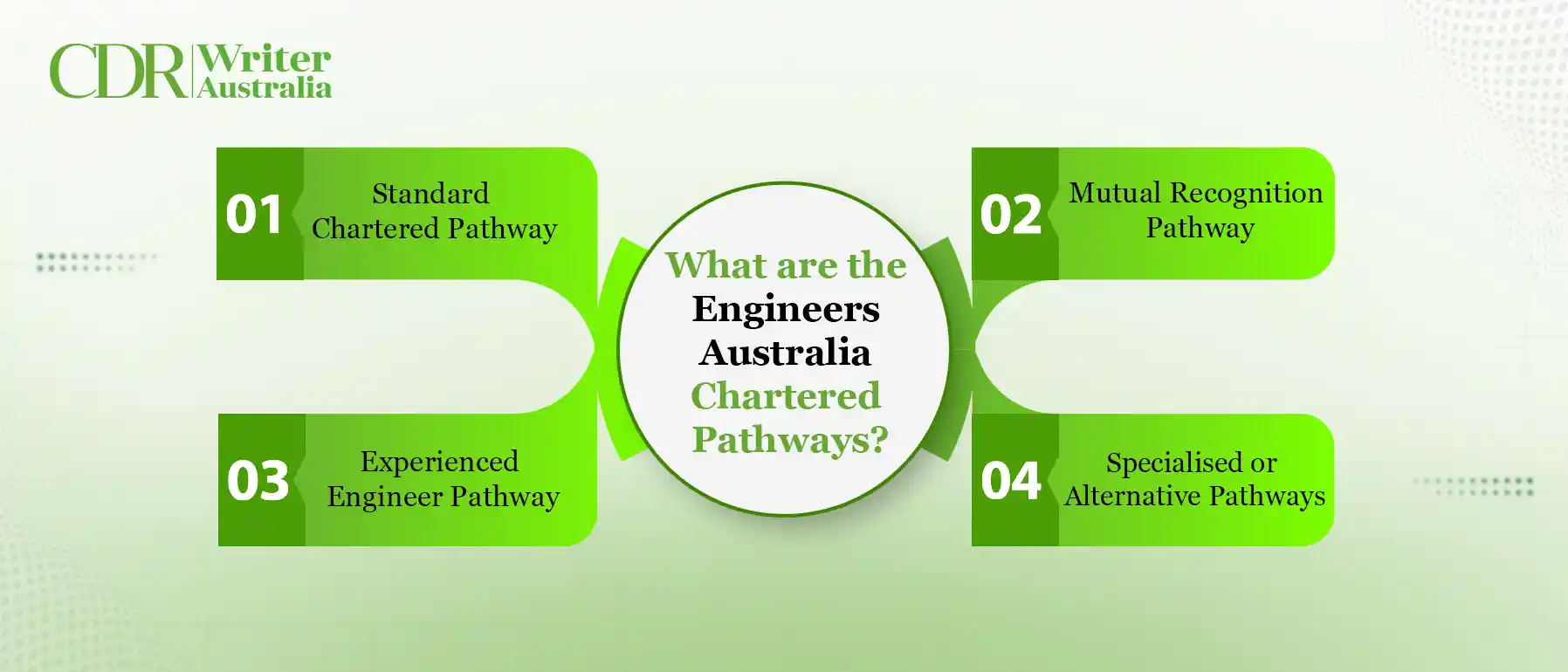
1. Standard Chartered Pathway
Engineers with solid industry experience, often around five years or more, usually choose the standard pathway after meeting the normal entry requirements. The standard Chartered assessment checks your experience, professional skills, and readiness for Chartered status.
2. Mutual Recognition Pathway
Applicants who already hold recognised professional credentials from approved overseas engineering bodies can apply through the mutual recognition pathway. This option can reduce duplicate assessment steps and provide a faster route toward Chartered status for eligible applicants.
3. Experienced Engineer Pathway
Senior engineers with extensive industry experience, often around 15 years or more, can apply through the experienced engineer pathway. This option suits professionals who have led teams, managed major responsibilities, and taken accountability for important engineering outcomes.
4. Specialised or Alternative Pathways
Applicants who hold unique qualifications, already have recognised assessments, or bring strong professional experience may qualify for a specialised chartered pathway.
Step-by-Step Process to Become a Chartered Engineer in Australia
To become a Chartered Engineer in Australia, you first need to confirm your eligibility and choose the right pathway for your background. From there, you move through the assessment stages by selecting your area of practice, submitting strong evidence, and gaining approval from Engineers Australia.
Step 1: Confirm Your Eligibility Before You Apply
The first stage checks whether your qualification, engineering experience, and professional background meet the current Chartered requirements. Applicants who already hold recognised qualifications and relevant industry experience usually move forward more smoothly.
Step 2: Join Engineers Australia or Select the Correct Pathway
Many applicants start through Engineers Australia membership, while the correct Chartered pathway depends on their qualification type and earlier assessment outcomes. Choosing the pathway that matches your degree and experience helps place your application in the correct assessment stream.
Step 3: Choose the Right Area of Practice
Your area of practice should match the engineering work you perform in your current or recent roles. It should also reflect the experience you can clearly demonstrate through projects and responsibilities.
Step 4: Prepare Your Competency Evidence and CPD Records
This stage requires competency examples that show your skills, responsibilities, and engineering decisions. Prepare CPD records that show recent training, learning activities, and ongoing professional development.
Step 5: Submit Your Chartered Engineer Application
Applicants submit the application through the official EA system. The submission usually includes personal details, employment history, qualification records, competency evidence, CPD records, and other required documents.
Step 6: Complete the Required Assessment or Interview
Engineers Australia may invite applicants to attend an interview or formal assessment as part of the Chartered process. This stage is considered the final review of your competency claims, engineering experience, and readiness for Chartered status.
Step 7: Receive Your Outcome and Use Your CPEng Status
Applicants who meet the required Chartered standards receive approval and gain CPEng status. They can then add the credential to their resume, LinkedIn profile, tender submissions, client proposals, and applications for senior engineering roles.
Also Read: Skill Assessment Validity for Engineers Australia
What are the Current Chartered Engineer Australia Fees?
The current Chartered Engineer Australia fees usually cover your main application costs. They can also include membership readmission fees or extra charges if you decide to add another area of practice later.
| Fee Type | Current Cost (AUD) | Applies To |
|---|---|---|
| Chartered Application Fee | $2,110 | New CPEng application, including administration fee |
| Included Administration Fee | $137.50 | Included within the application fee |
| Readmission Fee (1 to 5 years lapsed) | $310.20 | Former members rejoining Engineers Australia |
| Readmission Fee (More than 5 years lapsed) | $430.50 | Former members rejoining after a longer lapse |
| Additional Area of Practice Fee | $395 | Adding another Chartered practice area |
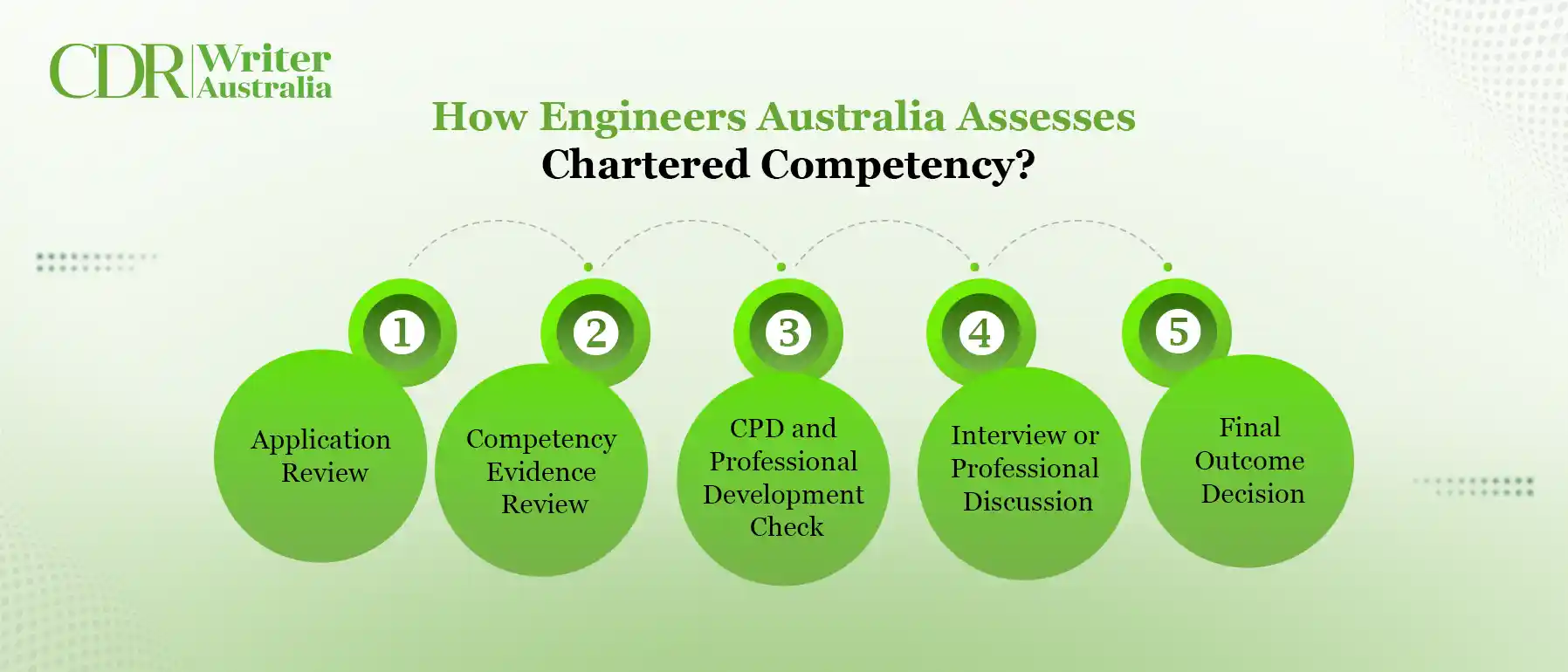
How Engineers Australia Assesses Chartered Competency?
Engineers Australia assesses your competency by reviewing your qualifications, work experience, competency evidence, and CPD records. It also looks at how you apply professional judgement in real engineering work before making a final decision on Chartered status.
1. Application Review
Checks your qualifications, employment history, recent engineering roles, selected area of practice, and submitted application details.
2. Competency Evidence Review
Reviews your career examples, technical decisions, project delivery responsibilities, leadership involvement, and measurable professional achievements.
3. CPD and Professional Development Check
Reviews your CPD records to confirm recent training, industry learning, and efforts to keep your technical knowledge current.
4. Interview or Professional Discussion
Allows you to explain your engineering experience, decision-making approach, technical judgement, and level of responsibility when required.
5. Final Outcome Decision
Confirms whether your overall experience and submitted evidence meet the standard required for Chartered status.
Key Takeaways
Frequently Asked Questions
Engineers Australia grants Chartered Engineer status in Australia through the CPEng assessment process. Applicants receive approval after meeting the required competency, industry experience, and professional practice standards.
Incomplete documents and weak competency evidence cause most Chartered application delays. Unclear job duties, missing CPD records, outdated resumes, or choosing the wrong pathway can also slow the assessment.
Chartered Engineer in Australia usually refers to CPEng. Engineers Australia awards CPEng for advanced professional competency, RPEQ authorises certain engineering services in Queensland, and NER lists engineers with recognised qualifications and experience.
Yes, overseas engineers can become Chartered in Australia when they meet Engineers Australia requirements. Qualification recognition, previous professional credentials, and relevant engineering experience usually decide the pathway available.
Yes, you can add another area of practice after becoming Chartered if you can show relevant experience in the additional discipline. Engineers Australia usually requires supporting evidence and an extra assessment fee.