
Skilled Occupation List Australia 2026: Jobs & Visa Options
Planning to move to Australia for work can feel overwhelming. Frequent changes to visa rules and the long list of eligible occupations make it difficult to know where to begin.
The Skilled Occupation List (SOL) identifies which occupations are currently in demand in Australia. When your profession is listed, it makes you eligible to apply for skilled migration visas, as the government prioritises applicants who can fill workforce shortages. This directly strengthens your visa application and increases your chances of gaining permanent residency.
In this blog, you will understand the eligible occupations, visa options, and how to match your skills with Australia’s job demand.
What is the Skilled Occupation List (SOL)?
The Skilled Occupation List (SOL) is a list of jobs that Australia needs most to keep its economy running smoothly. It shows which professions are eligible for skilled migration visas so that migrants bring the right skills to fill workforce gaps.
The SOL covers many sectors, including engineering, healthcare, IT, teaching, accounting, and agriculture. By using this list, the government prioritises applicants whose skills and qualifications match areas where local workers are not available.
The SOL is regularly updated by the Department of Home Affairs to reflect changes in Australia’s economy and workforce demand. This ensures that skilled migrants contribute effectively to the country’s growth, and that occupations listed remain relevant for visa eligibility and labour planning.
Purpose of the Skilled Occupation List
The SOL helps Australia manage skilled migration by:
- Highlighting jobs that are in high demand and crucial for the economy.
- Ensuring migrants have the skills necessary for these critical roles.
- Helping employers fill positions that local workers cannot fill.
- Keeping migration aligned with current and future workforce needs.
Types of Skilled Occupation Lists in Australia
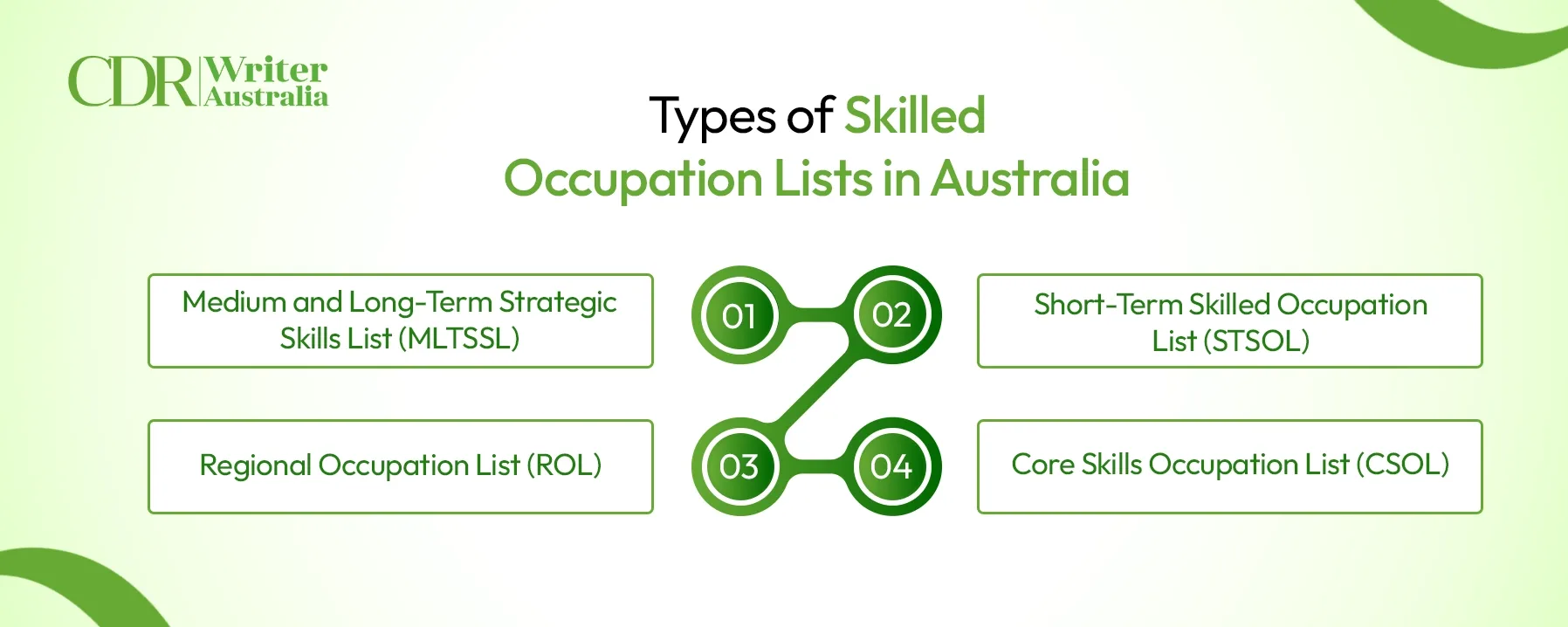
Australia maintains the following three types of Skilled Occupation Lists to address specific job market needs and migration requirements:
1. Medium and Long‑Term Strategic Skills List (MLTSSL)
MLTSSL identifies occupations with long-term national demand across Australia. Professionals in these roles can apply for permanent visas, such as Skilled Independent Subclass 189, ensuring a steady supply of talent for critical industries like engineering, healthcare, and IT. This list helps maintain national economic growth by prioritising highly skilled workers in sectors where shortages could impact productivity.
2. Short‑Term Skilled Occupation List (STSOL)
STSOL highlights occupations with short-term or regional demand. Migrants in these roles qualify for visas like Skilled Nominated Subclass 190 or Skilled Work Regional (Provisional) Subclass 491. The list enables states and territories to quickly address labour gaps, providing flexibility for regions to recruit skilled workers for emerging or temporary needs.
3. Regional Occupation List (ROL)
ROL focuses on occupations required specifically in regional areas. Migrants applying under ROL visas, such as Subclass 407, Subclass 491, and Subclass 494, help fill workforce shortages in remote communities. This supports local economic development, encourages population growth in regional areas, and ensures essential services continue to operate effectively outside major cities.
4. Core Skills Occupation List (CSOL)
CSOL is a recently introduced Skilled Occupation List that includes jobs employers across Australia are actively trying to fill right now. It mainly supports employer-sponsored visas like Subclass 482, helping businesses hire skilled workers when they cannot find suitable local candidates.
Skilled Migration Visa Options Under the SOL
The SOL links your occupation to the following visa pathways you can apply for:
- Employer Nomination Scheme (ENS) Visa - Subclass 186
- Skilled Independent Visa - Subclass 189
- Skilled Nominated Visa - Subclass 190
- Training Visa - Subclass 407
- Temporary Skill Shortage (TSS) Visa - Subclass 482
- Temporary Graduate visa - Subclass 485
- Skilled Work Regional (Provisional) visa - Subclass 491
- Skilled Employer Sponsored Regional (Provisional) visa - Subclass 494
Subclass 186 is linked to the MLTSSL, which allows skilled workers to live and work permanently in Australia under employer sponsorship.
Subclass 189 is connected to the MLTSSL, enabling skilled workers to live and work anywhere in Australia without needing sponsorship.
Subclass 190 is linked to MLTSSL or STSOL, which allows skilled workers to live and work permanently in Australia with state or territory nomination.
Subclass 407 is tied to the ROL, which lets international workers complete workplace-based training in Australia.
Subclass 482 is connected to STSOL or MLTSSL, which allows employers to sponsor skilled workers for positions they cannot fill locally.
Subclass 485 is linked to STSOL or ROL, which lets international graduates stay temporarily to work in Australia after completing their studies.
Subclass 491 is tied to the ROL, which allows skilled workers to live, work, and study in regional Australia with state, territory, or family sponsorship. It was introduced in 2019 to replace the Subclass 489 visa as the main points-tested pathway for regional skilled migration.
Subclass 494 is connected to ROL or STSOL, which lets regional employers sponsor skilled workers where local labour is unavailable.
Note: The Subclass 489 visa is no longer open for new applications, so you cannot apply for it now. However, applicants who received the Subclass 489 visa before it was discontinued can still use it under the existing conditions.
How Does the SOL Affect Your Visa Eligibility?
The Skilled Occupation List affects your visa eligibility and defines your migration pathways in Australia in the following ways:
- Eligibility to apply for skilled visas: You can apply for most skilled visas only if your occupation appears on the Skilled Occupation List, as the government only accepts listed occupations for migration.
- Available visa options based on your occupation: The list your occupation belongs to decides which visa types you can apply for, as each list connects to specific migration pathways.
- Access to permanent or temporary visa pathways: Some occupations qualify for permanent visas, while others only allow temporary or regional visas, depending on demand and policy.
- Requirement for state nomination or employer sponsorship: Certain occupations require approval from a state government or sponsorship from an employer before you can submit your visa application.
- Chances of receiving an invitation to apply: Occupations in higher demand are selected faster in the invitation rounds, which improves your chances of getting invited to apply.
Key Highlights
Frequently Asked Questions
Yes, you can apply for permanent residency if your occupation is on lists like MLTSSL and you meet visa requirements such as points and skills assessment.
You can check the official Skilled Occupation List and search for your job title or ANZSCO code. Make sure the role matches your actual work experience.
No, the SOL only makes you eligible to apply. You still need to meet visa conditions like points score, documentation, and other requirements.
Yes, you must complete a skills assessment through the relevant authority to prove your qualifications and experience meet Australian standards.
No, the SOL only makes you eligible to apply for a visa. You still need to meet visa conditions like points score, documentation, and other requirements.